Brand SEO in 2026: Why Brand Signals Matter More Than Ever
Updated : May 28, 2026
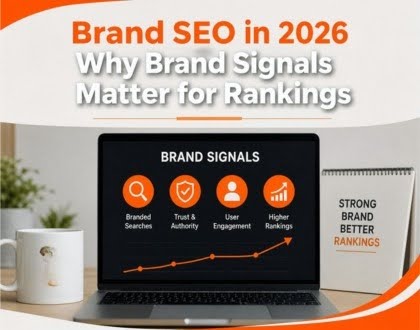
In 2026, brand signals have become one of the strongest drivers of SEO rankings. Websites are competing on brand signals such as trust, recognition, and user preference. If users know your brand, search for it, and choose it, search engines reward you with higher visibility.
According to SparkToro, over 50% of Google searches are now zero-click, meaning users often rely on familiar and authoritative sources without exploring multiple results. This means SEO is no longer just about ranking. It is about being the brand that users prefer and choose.
This blog explains how brand signals influence rankings in 2026, why they matter more than ever, and how to build a brand-driven SEO strategy that delivers long-term growth.
The Evolution of SEO: From Keywords to Brand
SEO has gone through multiple phases. In the early days, rankings depended heavily on:
- Keyword density
- Backlink quantity
- Basic technical optimization
Over time, search engines became more sophisticated. They began focusing on:
- Content quality
- Search intent
- User behavior
In 2026, the shift is even more advanced. Search engines now evaluate:
- Brand authority
- User trust
- Recognition and recall
According to Google, users are significantly more likely to engage with results from brands they recognize, especially in competitive search queries.
What Are Brand Signals?
Brand signals are indicators that show how well-known, reliable, and authoritative your brand is across the web.
They help search engines understand whether your business is credible and worth ranking higher.
Key Brand Signals Include:
- Branded search volume
How often users search for your brand name - Direct traffic
Users visiting your site directly - Mentions across the web
Even without backlinks - Social presence and engagement
Brand visibility across platforms - User behavior signals
Click-through rate, dwell time, repeat visits - Reviews and reputation
recognition signals from real users
What Is a Brand SERP and Why It Matters
A Brand SERP (Search Engine Results Page) is what appears when someone searches for your brand name.
It typically includes:
- Your website (homepage + key pages)
- Sitelinks
- Knowledge panel (if established)
- Social profiles
- Reviews and third-party mentions
A strong Brand SERP signals authority and credibility to both users and search engines.
Why It Matters for SEO
- Reinforces brand credibility
- Increases click-through rate
- Controls brand perception
- Strengthens entity recognition
A well-optimized Brand SERP turns your name into a high-converting search asset.
Why Brand Signals Matter More in 2026
Search engines are increasingly focused on delivering trustworthy results. Brand signals help them identify which content deserves visibility.
1. Trust Is a Ranking Factor
Google aims to rank content that users prefer. Strong brands naturally build that trust through consistent visibility and positive interactions.
If users repeatedly choose your brand, search engines see it as a reliable source.
2. Higher Click-Through Rates (CTR)
Users are more likely to click on familiar brands.
According to Backlinko, the #1 result gets around 27% of total clicks, but recognizable brands often outperform competitors even at similar positions due to brand familiarity.
Branded vs Non-Branded CTR
Branded searches typically generate significantly higher click-through rates than non-branded queries.
This happens because:
- Users already understand the brand
- There is lower decision friction
- Intent is stronger and more specific
3. Stronger Engagement Signals
Branded traffic typically shows:
- Longer session duration
- Lower bounce rate
- Higher repeat visits
These signals tell search engines that users find value in your content.
4. Dominance in AI Search (GEO)
AI-driven search systems prefer:
- Recognized brands
- Reliable sources
- Consistent authority
This means brand strength increases your chances of being included in AI-generated answers.
The Shift Toward Entity-Based SEO
Search engines now understand brands as entities, not just websites.
An entity is a recognized concept with:
- Name
- Identity
- Relationships
- Authority
When your brand becomes a strong entity, search engines can connect it to topics, industries, and user queries more effectively.
What This Means
- Your brand becomes easier to rank
- Your content gains more visibility
- Your authority compounds over time
Brand SEO vs Traditional SEO
Understanding the difference between traditional SEO and brand SEO is key to winning in 2026.
| Factor | Traditional SEO | Brand SEO |
|---|---|---|
| Focus | Keywords and rankings | Trust and recognition |
| Strategy | Optimize pages | Build brand authority |
| Signals | Backlinks, content | Branded searches, mentions |
| Timeframe | Short to mid-term | Long-term compounding |
| AI Impact | Limited | High |
What This Means
Traditional SEO helps you get visibility.
Brand SEO helps you own that visibility.
You can rank with traditional SEO, but without brand strength, those rankings are harder to maintain.
How Brand Signals Influence Rankings
Brand signals directly shape how search engines evaluate and rank your content. They go beyond traditional factors and reflect real user preferences.
1. Branded Search Demand
When users actively search for your brand name, it signals:
- Awareness
- authority
- Demand
Growing branded searches strengthen your overall authority and improve your ability to rank across keywords.
2. Click Behavior (CTR)
If users consistently choose your brand in search results, it sends a strong relevance signal.
Higher CTR combined with strong engagement tells search engines that your result is the preferred choice
3. User Engagement
Brand-driven traffic typically performs better:
- Longer time on site
- More pages per session
- Higher return visits
These signals reinforce content quality and authority.
4. Mentions Across the Web
Search engines track brand mentions, even without backlinks.
Frequent mentions across blogs, forums, and media increase your brand’s perceived authority and trustworthiness.
5. Consistency and Presence
A consistent brand across platforms strengthens entity recognition.
Search engines look for alignment in:
- Brand name
- Messaging
- Topic focus
Brand signals turn user behavior into ranking power.
6. Convert Offline Visibility into Search Demand
Brand building does not happen only online.
Offline and external efforts often drive branded search growth:
- Paid ads → increase brand awareness and search queries
- Social media → drives curiosity and brand recall
- Word of mouth → leads to direct brand searches
When users move from awareness to searching your brand, it creates strong SEO signals.
Real-World Example
Consider two websites targeting the same keyword.
- One is a well-known brand with strong recognition
- The other is technically optimized but unknown
Even if the second site has better on-page SEO, the branded site often ranks higher due to:
- Higher CTR
- Better engagement
- Stronger credibility signals
This demonstrates how brand strength influences rankings beyond technical factors.
How AI Search Amplifies Brand Importance
AI search systems are designed to deliver reliable answers quickly.
They prioritize sources that:
- Are widely recognized
- Have consistent authority
- Demonstrate expertise
What AI Looks For
- Clear authorship
- Consistent branding
- Strong topical authority
- Trusted mentions
This means brand SEO directly impacts visibility in AI-generated responses.
Example
Two websites publish similar content on the same topic.
- One is a recognized brand with consistent authority
- The other is new with no brand presence
Even if both have similar content quality, AI systems are more likely to select the recognized brand because it carries higher credibility signals.
How to Build Strong Brand Signals
Building brand authority requires a combination of strategies.
1. Create Consistent, High-Quality Content
Publish content that:
- Solves real problems
- Matches search intent
- Maintains consistency
Consistency builds recognition over time.
2. Increase Branded Search Demand
Encourage users to search for your brand by:
- Creating memorable content
- Building awareness campaigns
- Leveraging social media
3. Strengthen Topical Authority
Focus on a specific niche and cover it deeply.
This helps search engines associate your brand with that topic.
4. Earn Mentions, Not Just Links
Brand mentions across:
- Blogs
- Communities
- Industry platforms
Even without backlinks, these mentions strengthen brand signals.
5. Optimize for User Experience
A strong brand is supported by strong UX.
Users should:
- Trust your content
- Navigate easily
- Find answers quickly
Better experience leads to better engagement, which strengthens brand perception.
Brand + UX + GEO: The Winning Formula
In 2026, SEO success comes from combining three core elements: Brand signals, User Experience, and AI optimization (GEO).
Each plays a different role, but together they create a powerful ranking advantage.
How They Work Together
- Brand signals build authority and recognition
- User Experience (UX) drives engagement and satisfaction
- GEO ensures your content is selected in AI-generated results
When combined, they reinforce each other:
- Strong brand → higher CTR
- Better UX → longer engagement
- Strong engagement → better rankings
- Better rankings → more brand visibility
To stay competitive in AI-driven search, it’s important to understand how to use AI for SEO and align your content with evolving ranking signals.
Practical Example
A recognized brand publishes a well-structured, easy-to-read article that directly answers a query.
Result:
- Higher click-through rate
- Better engagement
- Increased chances of being featured in AI answers
If you’re running an online store, following a structured eCommerce SEO checklist can help you build stronger brand signals while improving visibility and conversions.
Common Mistakes to Avoid
Many websites struggle with SEO because they overlook the importance of brand signals.
1. Ignoring Brand Building
Focusing only on keywords limits long-term growth.
2. Inconsistent Messaging
Mixed branding weakens trust signals.
3. Over-reliance on Backlinks
Links matter, but brand authority matters more over time.
4. Neglecting User Experience
Even strong brands can lose rankings with poor UX.
5. Ignoring AI-driven search
Not optimizing for structured, clear content limits visibility in AI results
Getting clarity on how to start a structured SEO plan helps build a strong foundation for long-term brand growth and consistent search visibility.
Quick Summary
- Brand signals are a core ranking factor in 2026
- Strong brands generate higher CTR and engagement
- Branded searches signal trust and demand to search engines
- Entity-based SEO connects your brand to topics and authority
- AI search prioritizes recognized and trusted brands
- Combining Brand + UX + GEO creates the strongest SEO advantage
Turn Your Brand Into a Powerful SEO Asset with Kaizen Global
In 2026, SEO success is driven by brand, trust, and user preference. If your strategy is still focused only on keywords and backlinks, you are missing long-term growth.
At Kaizen Global, our expert SEO services focus on building strong brand signals, improving visibility, and helping businesses dominate search results in an AI-driven landscape.
Get in touch today and turn your brand into a high-impact, long-term growth engine.
FAQs
What are brand signals in SEO?
Brand signals are indicators like branded searches, mentions, engagement, and reputation that show how recognized your brand is.
Do brand signals directly affect rankings?
Yes. Strong brand signals improve CTR, engagement, and credibility, which indirectly and directly influence rankings.
Why are brand signals more important in 2026?
Because search engines and AI systems prioritize credible, and recognized sources over unknown websites.
How can I increase branded search traffic?
Build awareness through valuable content, consistent publishing, and promotion across multiple channels.
Are backlinks still important compared to brand signals?
Yes, but brand signals have a more long-term and compounding impact on SEO performance.
How do brand signals impact AI search results?
AI systems prefer reliable brands, making strong brand signals crucial for visibility in generated answers.
Turn Your Brand Into a Powerful SEO Asset with Kaizen Global
Insights

Mobile Seo Checklist - A Complete Guide
Mobile SEO refers to optimizing your website to ensure it performs well on mobile devices, offering a seamless user experience ...

25-Step SEO Migration Checklist
Migrating your website can feel like a daring task filled with potential challenges. No matter if you're redesigning your site ...

Local SEO Checklist: Maximize Your Local Reach
Local search engine optimization (SEO) has become essential for businesses aiming to connect with their community and attract nearby ...