Roofing SEO: Why Your Competitors Get More Leads from Google
Kaizen Global | Roofing SEO Guide
Roofing SEO is the process of optimizing a roofing company’s website, Google Business Profile, reviews, and online presence so it appears higher in Google search and Maps when homeowners look for roof repair, replacement, or inspection services in their area.
Roofing competitors get more leads from Google because Google sees them as more relevant and more prominent for the searches homeowners make. In practice, that usually means a better optimized Google Business Profile, more recent reviews, dedicated pages for each roofing service and area, and more local links and mentions.
None of these advantages is permanent. Each one can be measured, compared, and closed with a focused roofing SEO plan.
Why Do Some Roofing Companies Get More Leads From Google Than Others?
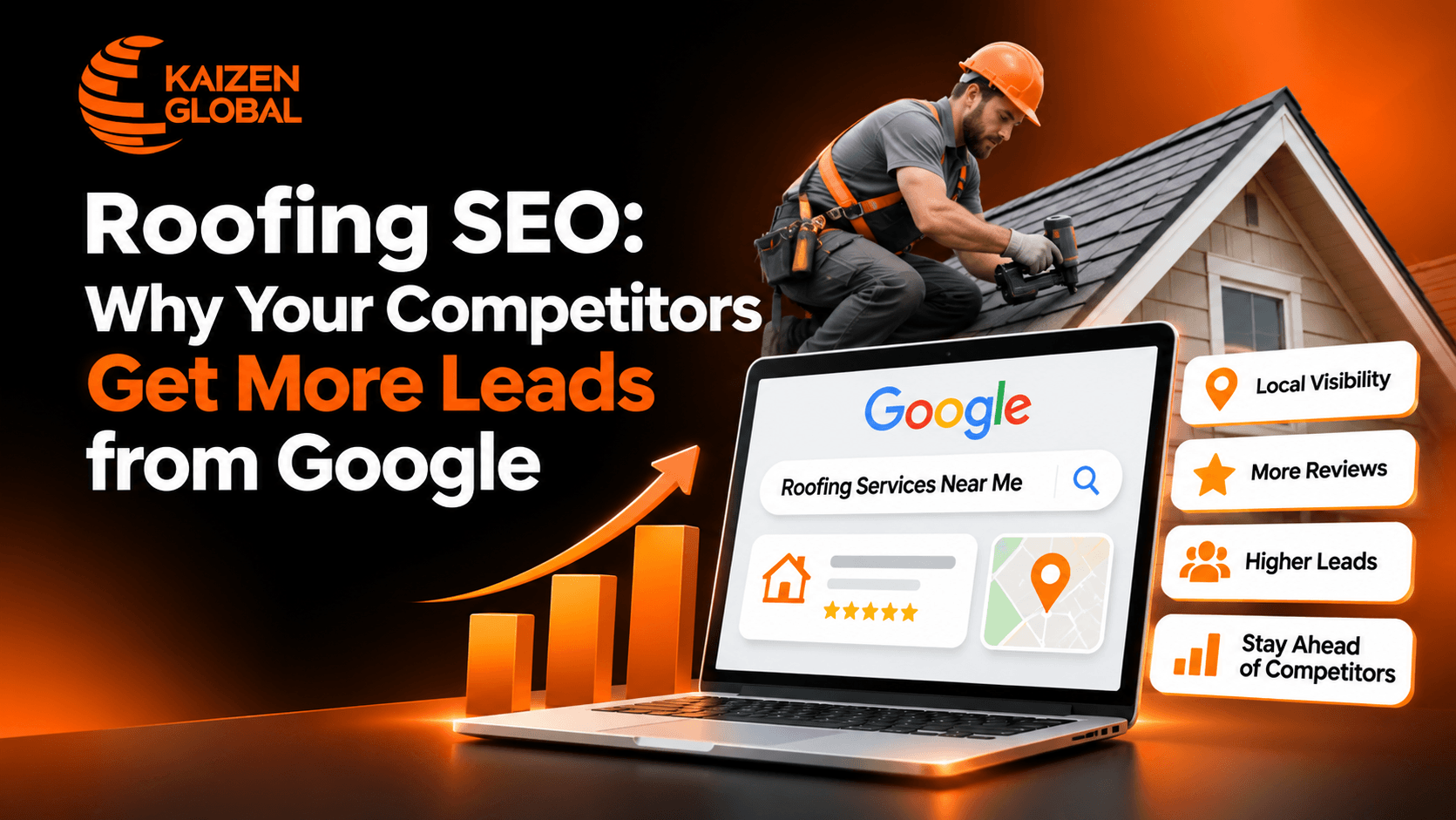
Google’s own documentation on how local ranking works names three main factors: relevance, distance, and prominence. The same page states there is no way to request or pay for a better local ranking.
Position matters because homeowners rarely look far. BrightLocal’s 2026 consumer search research found that 72% of people looked at three or fewer businesses before deciding, according to this roundup of 2026 local SEO statistics.
Relevance Decides Whether a Roofer Is Considered
Relevance measures how well a business matches the search. A roofer with the right categories, a detailed services list, and a dedicated page for “roof replacement” looks more relevant for that search than one with a single generic services page.
Prominence Decides Who Wins the Top Spots
Prominence reflects how well known a business is. Google says it draws on information from across the web, including links, articles, and directories, and that review count and rating factor into local ranking.
Distance Explains What Cannot Be Changed
Distance is the searcher’s proximity to the business. It cannot be optimized directly, which is why a competitor closer to a neighborhood may outrank a stronger company across town.
How Can a Roofer Find Out Exactly Why Competitors Rank Higher?
Guessing at the problem wastes months. A competitor gap audit compares the businesses that actually win the searches against the company’s own presence, signal by signal.
Identify the Real Search Competitors
The companies winning on Google are not always the ones a roofer sees as rivals in town. Searching the most valuable queries, such as “roof replacement” and “roof repair near me,” from several points across the service area shows who really holds the map pack.
Rank tracking tools with a grid view show the same thing at scale, and a short overview of the main types of SEO tools helps pick one that fits the budget.
Compare Profiles, Websites, and Links Side by Side
Once the top three competitors are clear, each signal can be compared directly. The scorecard below shows where to look and what a gap usually means.
| Signal | Where to check | What a gap looks like |
|---|---|---|
| Primary and secondary categories | Google Business Profile | Competitor lists more relevant services |
| Review count and recency | Google Business Profile | Competitor gets new reviews every week |
| Photos and project updates | Google Business Profile | Competitor posts recent job photos |
| Service pages | Competitor website menu | Competitor has a page for each roofing service |
| Location pages | Competitor website and sitemap | Competitor has unique pages for nearby towns |
| Local links and mentions | Backlink tool | Competitor is linked from suppliers, news, and associations |
| Page speed on mobile | Google PageSpeed Insights | Competitor pages load noticeably faster |
The biggest gaps become the first priorities. A roofer that trails on reviews and service pages but leads on links should fix the first two before building more links. Repeating this scorecard every quarter shows which gaps have closed and where competitors have moved ahead.
Which Google Business Profile Gaps Cost Roofers the Most Leads?
The Google Business Profile controls whether a roofer appears in the map pack, which sits above most organic results for local searches. Small gaps here often explain why a competitor shows up and the company does not.
Wrong or Incomplete Categories
The primary category should be “Roofing contractor.” Secondary categories should reflect other services actually offered, such as gutter or siding work, since categories feed directly into relevance.
Thin Services and Photo Sections
Competitors who list every service with a short description give Google more to match against searches. Regular photo updates from real jobs also show homeowners that the company is active.
Address and Service Area Mistakes
Most roofers serve customers at their homes, so the address setting matters. According to Google’s Business Profile guidelines, service-area businesses should hide their address, and a virtual office cannot be listed unless it is staffed during business hours. A full local SEO checklist covers the rest of the profile and citation setup.
How Do Reviews Give Roofing Competitors an Edge?
Reviews influence both ranking and the homeowner’s decision. The Federal Trade Commission recognized how much weight reviews carry when it issued a final rule banning fake reviews and testimonials in August 2024. The rule prohibits businesses from buying positive or negative reviews, posting fake or AI-generated reviews, and suppressing honest negative ones, and it allows the FTC to seek civil penalties against knowing violators.
Review Volume and Recency
Total review count matters, but so does a steady flow of new reviews, which shows homeowners the business is active today. Asking every customer at project completion, ideally with a direct review link sent by text, keeps the flow consistent.
Reviews should never be bought or incentivized. Both Google and the FTC prohibit it, and a suspended profile or federal penalty costs far more than slow review growth.
Review Detail That Mentions Services and Places
Reviews that mention the service and the neighborhood, such as a roof replacement in a specific suburb, add relevance naturally. Asking open questions like “What did we do for your home?” encourages that detail without scripting the review.
Owner Responses to Every Review
Replies show homeowners how the company treats customers, especially when something went wrong. The broader question of how Google reviews affect SEO shows why responses and recency matter as much as the star rating.
Which Keywords Should a Roofing Company Target?
Roofing company SEO starts with knowing which searches lead to jobs. Mapping them to pages first prevents pages from competing with each other.
Group Searches by Intent
Emergency and repair searches carry urgency and convert quickly. Replacement and cost searches start earlier and involve more research. Material and specialty searches are often less competitive, so roofers who offer those services can win them with focused pages even in crowded markets.
Map Each Keyword to One Page
| Search type | Example query | Best page type |
|---|---|---|
| Emergency | emergency roof leak repair Dallas | Repair service page |
| Repair | roof repair near me | Location page and Google Business Profile |
| Replacement | roof replacement Plano | Replacement service or location page |
| Cost research | how much does a new roof cost | Cost guide |
| Decision research | repair or replace a roof | Comparison guide |
| Specialty | metal roofing contractor Dallas | Material service page |
| Commercial | commercial flat roof repair | Commercial service page |
Each keyword then needs to appear naturally in the page title, main heading, and body copy, which a standard on-page SEO checklist covers step by step.
What Website Pages Do Top-Ranking Roofers Have?
Roofers who dominate Google rarely rely on a homepage and one services page. They build a page for each service, each area, and each major customer question.
Dedicated Pages for Each Roofing Service
Roof replacement, roof repair, inspections, storm damage, gutters, metal roofing, and commercial roofing each deserve a separate page. Each page should explain the process, materials, timeline, and warranty for that service specifically.
The homepage should make the offer clear at a glance. Here is a simple before and after for the main headline.
Before: “Quality Roofing You Can Trust. Serving Our Community for Over 20 Years.”
After: “Roof Replacement and Repair in Dallas. Licensed, insured, and locally owned, with free inspections and written estimates.”
The second version names the services, the city, and the next step. It also answers the trust questions homeowners bring to the search.
Location Pages With Real Local Detail
Location pages work when they show genuine local knowledge. Common roof types in that area, local permit requirements, HOA rules, typical weather damage, and photos of nearby projects make each page useful and distinct.
Pages that only swap the city name tend to struggle and can compete with each other. Companies serving several towns can plan local SEO across locations, and a flexible website design and development setup makes adding pages simple.
Storm Damage and Insurance Claim Pages
Storm searches spike after hail and wind events, often for terms like “hail damage roof inspection.” A dedicated storm page that explains what damage looks like, how inspections work, and how the insurance process generally unfolds captures that demand.
These pages should explain the process without promising claim outcomes. Several states restrict contractors from negotiating insurance claims on a homeowner’s behalf, so the wording should stay factual.
Pages Linked in a Hub-and-Spoke Model
Each service page acts as a hub that links to related location pages and guides. Cost and comparison guides link back to the service pages where homeowners request estimates.
This structure moves visitors from a question to an estimate form in two or three clicks. It also signals which pages matter most, since the strongest pages receive the most internal links.
What Trust Signals Help Roofers Convert Search Visitors?
Ranking brings visitors to the page. Trust signals decide whether those visitors call the roofer or click back to a competitor.
Licensing and Insurance Details
License numbers where the state requires them, proof of liability insurance, and workers’ compensation coverage should be easy to find. These details matter even more after storms, when homeowners grow wary of out-of-town contractors.
Manufacturer Certifications and Warranties
Shingle manufacturers such as GAF, Owens Corning, and CertainTeed run contractor certification programs that unlock extended warranty options. Listing only the certifications the company actually holds, with links to the manufacturer’s contractor directory, lets homeowners verify them.
Real Project Photos and Galleries
Before and after photos of real roofs carry more weight than stock images. Proper image optimization for SEO keeps those galleries fast and helps them appear in image search.
What Content Helps Roofers Win Searches Before the Call?
Many homeowners research for weeks before requesting a roof estimate. Content that answers their questions puts the company in front of them early.
Cost and Financing Guides
Cost searches are among the most common roofing queries. A guide that explains what drives price, such as roof size, pitch, materials, tear-off layers, and permits, builds trust without committing to exact numbers.
Repair Versus Replacement Guides
Homeowners often do not know whether a leak means a patch or a new roof. A clear guide covering roof age, damage extent, and cost trade-offs captures this decision-stage search and leads naturally to an inspection request.
Seasonal Maintenance Guides
Guides on preparing a roof for winter, clearing gutters, or spotting wear after a hot summer gain visibility before each season begins. Prices, materials, and local rules change, so a routine to refresh old content keeps every guide accurate, and professional SEO content writing services can keep publishing steady during busy months.
What Technical Problems Keep Roofing Sites Off Page One?
Roofing websites tend to carry large project galleries and video, which can slow pages down. Technical gaps rarely cause problems alone, but they often decide close contests between competitors.
Slow, Image-Heavy Pages
Uncompressed project photos and autoplay videos are common culprits. The balance between Core Web Vitals and user experience matters most on service and estimate pages, where homeowners decide to call.
Weak Mobile Experience
A homeowner dealing with a leak may well be searching from a phone. Click-to-call buttons, short estimate forms, and readable text on small screens all affect conversions, and a mobile SEO checklist covers the common fixes.
Missing RoofingContractor Schema
Schema.org includes a dedicated RoofingContractor type for roofing businesses. Combined with Google’s local business structured data guidelines, it confirms the company name, address, phone, hours, and service area. A complete technical SEO checklist covers schema alongside redirects and indexing.
How Do Roofing Competitors Earn More Local Links?
Links and mentions feed directly into prominence. Competitors with strong local link profiles usually built them through relationships, not tricks.
Supplier, Manufacturer, and Association Listings
Manufacturer contractor directories, local supply house partner pages, and memberships in roofing or home builder associations often include links. Local chambers of commerce and the BBB add credible citations as well.
Community Sponsorships and Local News
Sponsoring a youth sports team, donating a roof to a local nonprofit, or offering storm safety tips to local reporters can earn mentions from community sites and news outlets. These links carry local weight that national directories cannot match, and they strengthen the brand signals behind SEO.
How Are AI Search Tools Changing Roofing Lead Generation?
Homeowners increasingly ask AI tools for contractor recommendations. BrightLocal’s 2026 survey found that 45% of consumers used ChatGPT or similar AI tools for local business recommendations, up from 6% the year before.
Answer-First Service Pages
AI systems favor pages that answer a question directly, then support it with verifiable details. A replacement page that opens by stating the service, area, materials, and warranty is easier to cite than one that opens with company history.
Consistent Business Information
AI tools piece together a business from its website, profiles, and directory listings. Matching names, services, service areas, and certifications across every source makes the company easier to identify and recommend. The differences between SEO, AEO, and GEO explain why the same page now needs to serve search engines and AI tools at once.
How Should Roofers Measure Whether SEO Is Closing the Gap?
Rankings alone do not show whether the gap with competitors is shrinking. Two measures tell the real story.
Track Map Pack Visibility Across the Service Area
Grid rank tracking shows map pack positions across neighborhoods, not just from the office location. Improvement usually spreads outward from the business location over time.
Track Calls and Form Leads by Source
Call tracking numbers and form source fields separate organic leads from referrals and paid channels. Google Business Profile performance data adds calls, direction requests, and website clicks from local results.
What Does a Roofing SEO Audit Checklist Include?
The Roofing Visibility Checklist shows whether a roofing company is set up to compete for leads on Google. Each item below should be true before investing heavily in new content or links.
- The real search competitors are identified for the top service queries
- The Google Business Profile uses “Roofing contractor” as the primary category
- Every offered service is listed on the profile and has its own page
- Each served town has a unique location page with local detail
- A storm damage page explains inspections without promising claim outcomes
- New reviews arrive steadily and every review gets a reply
- License, insurance, and manufacturer certifications are visible and verifiable
- Real project photos replace stock images and load quickly
- RoofingContractor schema is in place on the site
- Local links come from suppliers, associations, and community sources
- Organic leads are tracked separately from referrals and paid leads
- The competitor scorecard is reviewed every quarter
Frequently Asked Questions
How long does it take to catch up with competitors on Google?
Profile and review improvements can shift map pack visibility within a few months, while new service and location pages take longer to gain traction. Timelines depend on how far ahead competitors are, and the factors behind how long local SEO takes explain why markets differ.
Do Google Local Services Ads improve organic map rankings?
No. Local Services Ads are a separate paid placement, and Google states that local ranking cannot be bought. They can bring leads alongside SEO, but they do not raise the map pack position.
Should a roofer keep profiles on Angi, Yelp, and HomeAdvisor?
Complete, accurate profiles on major directories act as citations and put the company in front of homeowners already browsing those sites. Paying for their leads is a separate decision from keeping the free profile accurate.
Is commercial roofing worth targeting separately?
Commercial buyers search differently, often using terms like “TPO roof repair” or “commercial roof maintenance contract.” A dedicated commercial section reaches property managers and facility owners that residential pages miss.
Why do some competitors have keywords stuffed into their business name?
Names like “Best Dallas Roof Repair Experts” on a profile often break Google’s rule that the profile name must match the real business name. Roofers who spot this can suggest an edit on the competitor’s profile or report it to Google, rather than copying the tactic and risking suspension.
Should roofers use Google Business Profile posts?
Posts give homeowners a reason to choose the company, such as a recent project, a seasonal inspection offer, or storm safety tips. They also show the profile is actively managed, which supports trust even when the ranking effect is small.
Take Back the Roofing Leads Going to Competitors
Kaizen Global builds SEO strategies for roofing contractors, from competitor gap audits and service pages to Google Business Profile optimization, review growth, and AI search visibility. Every plan starts with an honest look at why competitors are winning today.
Talk to our SEO team or book a free consultation to compare your site against the roofers outranking you. See how our professional SEO services work, or reach us directly at +92 312 4422229 or info@thekaizenglobal.com.
Grow Your Roofing Leads From Google — Request a Roofing SEO Strategy Review
Insights

Mobile Seo Checklist - A Complete Guide
Mobile SEO refers to optimizing your website to ensure it performs well on mobile devices, offering a seamless user experience ...
25-Step SEO Migration Checklist
Migrating your website can feel like a daring task filled with potential challenges. No matter if you're redesigning your site ...
Local SEO Checklist: Maximize Your Local Reach
Local search engine optimization (SEO) has become essential for businesses aiming to connect with their community and attract nearby ...